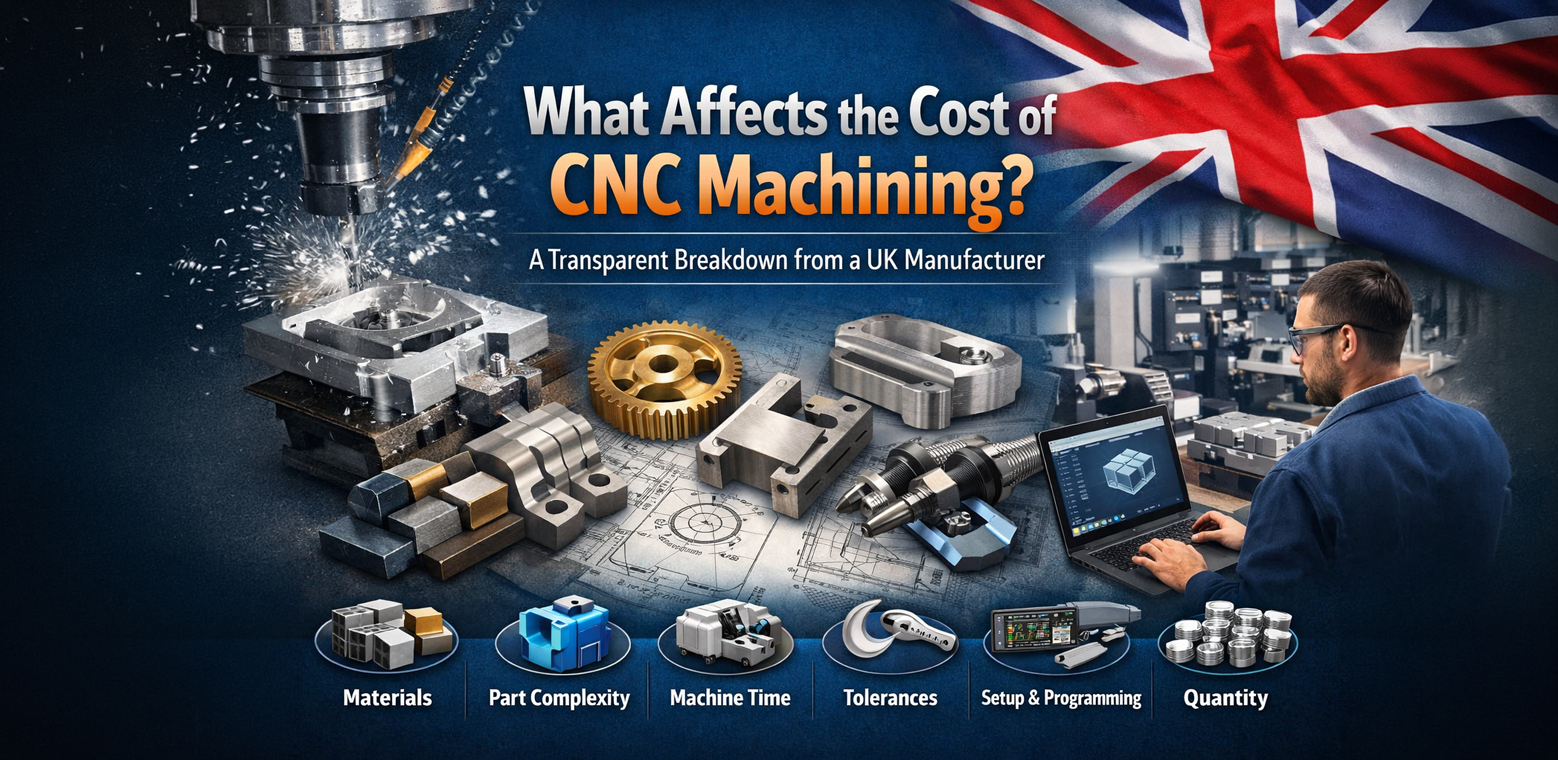
What Affects the Cost of CNC Machining?
A Transparent Breakdown from a UK Manufacturer
When you’re sourcing CNC-machined parts, price matters — but so does understanding what you’re actually paying for.
At our UK CNC machining facility, we believe in clear, honest pricing. CNC machining costs aren’t arbitrary; they’re driven by a handful of measurable factors. Whether you’re ordering a one-off prototype or a production batch, this guide explains what influences cost — and how smart decisions at the design stage can reduce it.
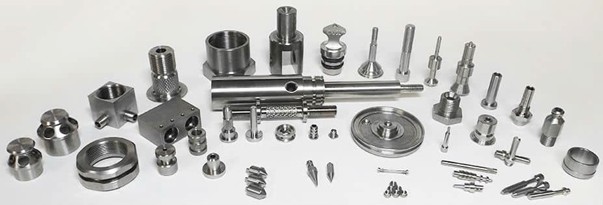
Material Selection
Material choice directly affects both machining time and overall cost.
Common CNC machining materials in the UK include:
- Engineering plastics (ABS, Nylon, Acetal)
- Aluminium alloys (6082, 7075)
- Mild and stainless steels
- Brass
- Titanium and specialist alloys
Harder or more abrasive materials require slower cutting speeds and increased tool wear, which raises machining costs. Aluminium remains one of the most cost-effective options due to its excellent machinability.
Our advice: Choose the lowest-cost material that still meets your mechanical and environmental requirements.
Part Design & Complexity
The complexity of your component plays a significant role in pricing.
Cost increases with:
- Tight tolerances
- Deep pockets or thin walls
- Complex 3D geometry
- Multiple machining setups
- Undercuts or difficult tool access
Simple designs often require fewer setups and shorter cycle times, keeping costs down.
More complex parts may require multi-axis machining and specialist tooling.
Our advice: Early design consultation can reduce machining time and cost without
affecting performance.
CNC Machine Time
Machine time is one of the largest contributors to CNC machining cost.
UK CNC machining rates typically reflect:
- Machine capability (3-axis vs 5-axis)
- Operator expertise
- Energy and overhead costs
- Required precision and inspection
Parts with longer cycle times, frequent tool changes, or fine finishing requirements
naturally cost more.
Our advice: Avoid unnecessary features or ultra-tight tolerances unless they are functionally required.
Programming & Setup
Before machining begins, every job requires:
- CAM programming
- Workholding and fixture setup
- Tool selection
- First-off inspection
These are fixed costs, meaning they apply whether you order one part or one hundred. This is why prototypes and low-volume parts have a higher per-unit cost.
Our advice: Where possible, batch production helps spread setup costs and reduce unit pricing.
Tolerances & Surface Finish
Precision comes at a price.
Tighter tolerances and premium finishes increase cost due to:
- Slower machining speeds
- Additional inspection steps
- Secondary finishing processes (anodising, bead blasting, polishing)
Our advice: Specify tight tolerances only where they are critical to function.
Quantity Ordered
CNC machining is ideal for low- to medium-volume production, but quantity still matters.
- One-off prototypes: highest unit cost
- Small batches: improved efficiency
- Larger batches: significantly lower unit cost
Our advice: Ordering slightly higher quantities upfront is often more economical than repeat small orders.
Why UK CNC Machining Costs More — and Why It’s Worth It
UK manufacturing costs reflect:
- Highly skilled labour
- Strict quality standards
- Reliable lead times
- Clear communication
- Full compliance with UK and EU regulations
For many customers, local CNC machining reduces risk, avoids delays, and delivers better long-term value.
Typical CNC Machining Costs (Indicative Only)
| Component Type | Typical Cost Range |
| Simple aluminium part | £30–£80 |
| Medium-complexity steel component | £80–£250 |
| Complex multi-axis part | £250–£1,000+ |
| One-off prototype | Higher per unit |
| Production batches | Lower unit cost |
Final pricing depends on material, tolerance, quantity, and lead time.
Transparent Pricing. Reliable Manufacturing.
Understanding what drives CNC machining costs allows better decisions at every stage
— from design to delivery. As a UK-based manufacturer, we work closely with our customers to optimise designs, reduce costs, and deliver precision parts on time.
If you’d like a quotation or design feedback, our engineering team is always happy to help.