CNC Milling vs CNC Turning: Which Process Does Your Part Really Need?
When it comes to CNC machining, choosing the right process can make the difference between a cost-effective, high-precision part and unnecessary production complexity. Two of the most common methods—CNC milling and CNC turning—each excel at different types of parts.
So how do you know which one your component actually needs?
Let’s break it down in practical terms, from geometry and tolerances to production
efficiency and cost.
What Is CNC Milling?
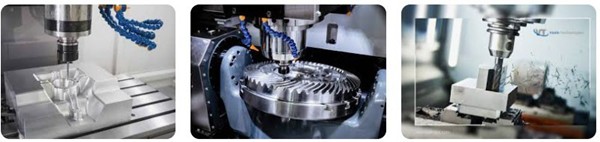
CNC milling uses rotating cutting tools to remove material from a stationary workpiece. The cutting tool moves along multiple axes (typically 3, 4, or 5) to create complex shapes, pockets, slots, and contours.
CNC Milling Is Ideal For:
- Parts with complex geometries
- Flat surfaces, slots, or cavities
- Asymmetrical designs
- Multi-face machining
- Tight tolerances across multiple planes
Common CNC Milled Parts:
- Housings and enclosures
- Brackets and mounts
- Medical and aerospace components
- Mold and die components
Key Advantage: Extreme versatility. Milling can handle some of the most intricate part
designs in modern manufacturing.
What Is CNC Turning?
CNC turning works the opposite way. The workpiece rotates while a stationary cutting tool removes material. This process is performed on a CNC lathe and is optimized for producing round or cylindrical parts.
CNC Turning Is Ideal For:
- Cylindrical or round components
- Parts with rotational symmetry
- High-volume production runs
- Excellent surface finishes on round features
Common CNC Turned Parts:
- Shafts and pins
- Bushings and spacers
- Couplings and fittings
- Threaded components
Key Advantage: Speed and efficiency. Turning is often faster and more cost-effective for
round parts.
CNC Milling vs CNC Turning: A Practical Comparison
| Consideration | CNC Milling | CNC Turning |
| Part Geometry | Complex, multi-face | Round, cylindrical |
| Motion | Tool rotates | Part rotates |
| Best For | Detailed features, pockets | Shafts, rings, threads |
| Production Speed | Moderate | Very fast |
| Cost Efficiency | Better for complex parts | Better for high-volume round parts |
Which Process Does Your Part Need?
Ask yourself (or your manufacturer) these questions:
·Is the part primarily round?
→ CNC turning is likely the best choice.
·Does it have multiple faces, pockets, or complex contours?
→ CNC milling is the better fit.
·Does it need both?
→ Many parts start with CNC turning and finish with CNC milling for features like flats, holes, or keyways.
At professional machine shops, hybrid workflows are common—choosing the most
efficient process at each stage to optimize quality, lead time, and cost.
Why the Right Choice Matters
Selecting the correct machining process:
- Reduces material waste
- Shortens production time
- Lowers per-part cost
- Improves dimensional accuracy
- Ensures consistent part quality
In other words, it’s not just about can a part be milled or turned—it’s about what makes the most manufacturing sense.
Partner With a Machining Team That Knows Both
At the end of the day, the best results come from working with a manufacturer that understands both CNC milling and CNC turning—and knows when to use each.
If you’re unsure which process your part requires, a quick design review can often uncover opportunities to improve manufacturability, reduce costs, and streamline production.
Need help deciding?
Our engineering team is always happy to review your drawings and recommend the most efficient machining strategy for your application.